Boudoir poses: plan a set with different frames and angles
Build a varied AI portrait set with a simple pose matrix. Change framing, gaze and hand placement while keeping the person and outfit coherent.
At a glance
- Vary the frame and viewpoint as well as the body position.
- Keep the person, outfit and a clear visual theme across the set.
- Describe hands and gaze separately so each photo is easy to review.
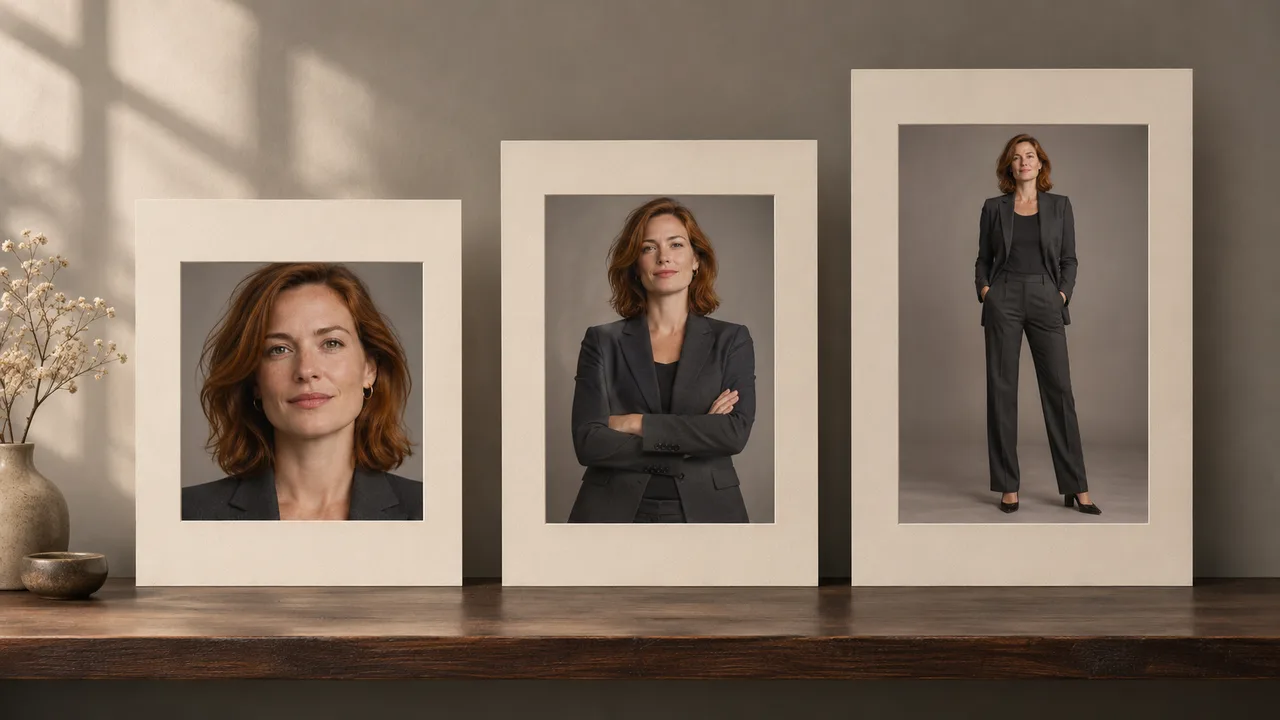
Six different pose names can still produce six pictures that feel the same. A useful portrait set changes what each frame shows: one establishes the person, another shows the outfit, and a closer photograph gives the expression more space.
For adult, non-explicit boudoir-inspired portraits, you can build that variation with comfortable seated and standing positions. Start with a small pose matrix rather than a long list of increasingly complicated body instructions. The examples below are planning suggestions, not demonstrations of tested outputs.
Separate the pose from the composition
A pose is what the body is doing. Framing is how much of it appears in the picture. Viewpoint is where the camera seems to be. You can change one without changing all the others.
For example, a seated three-quarter pose can become a waist-up portrait or a wider frame showing the chair. Those photographs have different jobs even if the hands remain in the same place. Conversely, two poses can feel nearly identical if both use the same crop, gaze and shoulder angle.
Set the overall mood with a complete portrait concept, then choose one outfit. Those shared choices give the pose variations something to belong to.
Use a small matrix
| Choice | Useful options | Decision to make |
|---|---|---|
| Body position | Seated, standing, lightly leaning | Which positions fit the scene? |
| Frame | Close portrait, waist-up, three-quarter, full-length | What should this photo show? |
| Viewpoint | Front, slight angle, profile | How much of the face should remain visible? |
| Gaze | Toward camera, slightly past camera, toward a window | What expression fits the purpose? |
| Hands | At sides, separately on lap, one on chair arm | Can you describe the contact clearly? |
You do not need every combination. Pick a few that add a meaningful difference. A profile may be useful because it shows another side of the face; a second front-facing waist-up frame may be useful because its expression is different. Repetition is a problem only when it adds nothing you want.
The pose library provides starting points such as natural standing and seated three-quarter positions. Treat a pose reference as direction for posture, not a promise that the generated anatomy or camera angle will match exactly.
A six-frame example
Imagine one adult subject in an opaque evening outfit, with a plain chair and a quiet indoor scene. Keep those choices stable for this sample sequence.
| Photo | Pose and frame | Main difference from the previous photo |
|---|---|---|
| 1 | Front-facing, waist-up, relaxed arms | Establish the face and outfit |
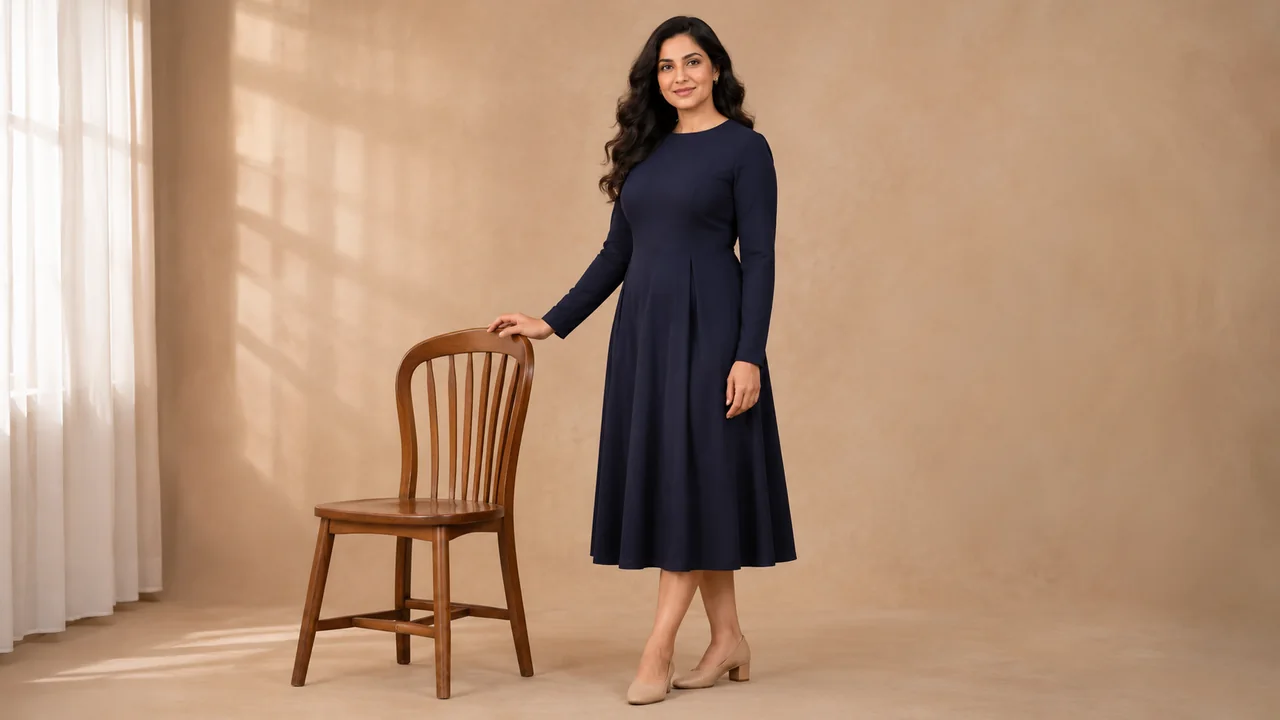
| 2 | Standing, full-length, slight shoulder turn | Show the complete silhouette |
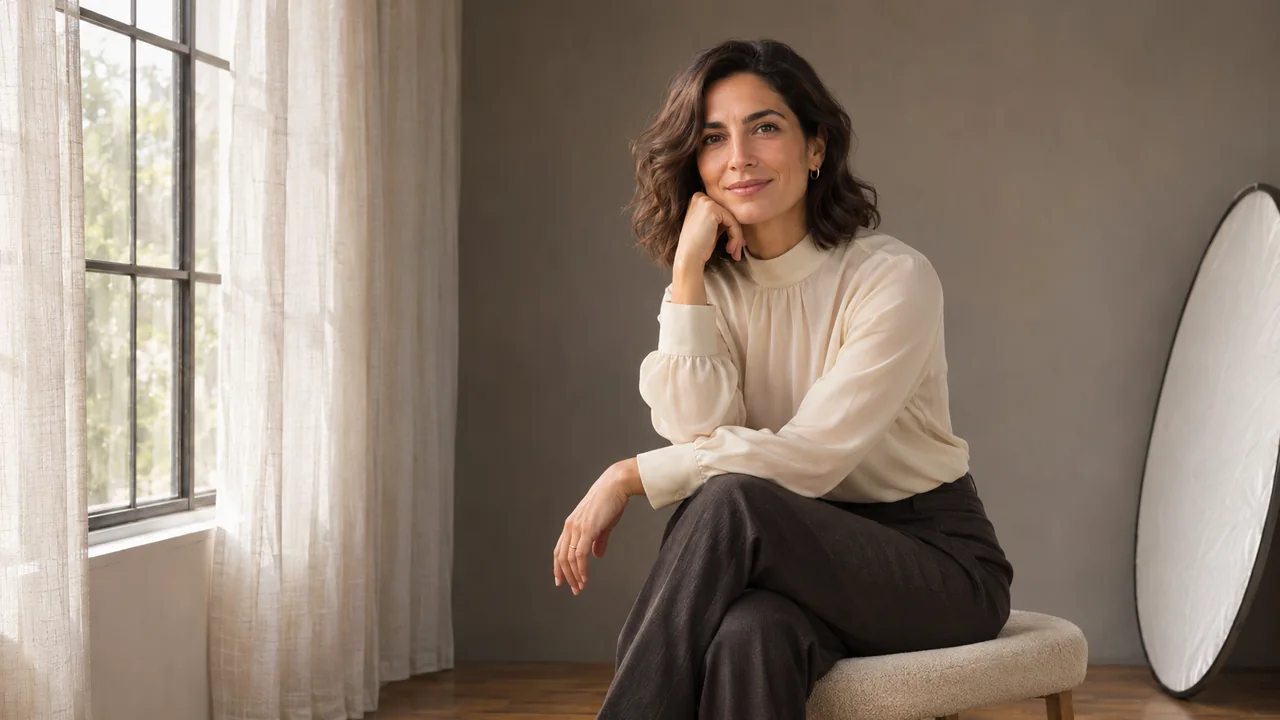
| 3 | Seated three-quarter, knees-up, hands on lap | Change body position and shape of the frame |
| 4 | Seated close portrait, looking toward camera | Concentrate on expression |
| 5 | Standing three-quarter, looking slightly away | Introduce a quieter gaze |
| 6 | Wider seated profile with a readable face | Show the room and a different outline |
Adapt the number of frames to the pictures you actually need. Use the six-photo planning guide to translate the sequence into the choices and quote you review before generation.
Give the hands one clear task
“Elegant hands” does not say where the hands belong. “Both hands rest separately on the lap” does. A hand can rest on a chair arm, touch an existing garment edge or hang naturally, but each contact point gives you another detail to inspect.
Keep the task consistent with the outfit and scene. Do not request pockets in a pocketless dress or a hand on a table that is absent from the plan. For an early set, avoid asking the same hand to hold an object, touch the face and move through the hair.
If you want fewer decisions, the beginner pose guide narrows this approach to a few simple starting positions. For body representation and proportion checks, read plus-size portrait framing.
Check variety without rewarding distortion
Place the results next to one another. First ask whether the person and outfit remain recognizable. Then compare crop, shoulder direction, gaze and visible hands. A photograph that is dramatically different because it changed the face or body is not useful variety.
Look for accidental repetition too. If all the results became close portraits, adding another pose name may not solve the problem. Make the frame instruction clearer and check that the selected pose and scene support it. The framing and aspect ratio guide helps distinguish a tighter crop from a different image shape.
You do not have to keep an image just because its planned role was important. Choose the strongest usable photographs, and only regenerate the missing role if you still need it. A compact set with clear differences is often more useful than a larger set of almost-identical frames.
Cover: AI-generated editorial illustration, not an AIGirlShot result.
Written by
AIGirlShot Team
Portrait planning and practical guides from the AIGirlShot team.
Related posts